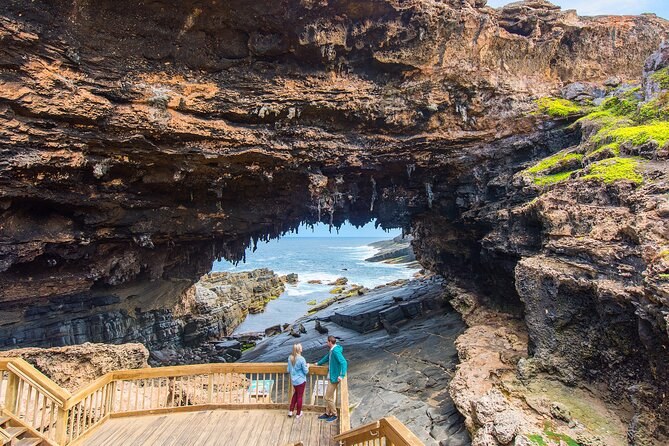
Full-Day Kangaroo Island Experience Departing from Kangaroo Island
A coach day with hotel pickup in Kingscote, American River or Penneshaw, lunch, the far west and a wildlife park.
From $154 per person (minimum 1)
Check AvailabilityThe island's weather is mild, but it still shapes your day. Heat moves the animals into the shade, wind stops the boats, and winter rain closes a few park roads. These are the Bureau of Meteorology's own averages for a Kangaroo Island reservation from Kingscote.
Rain rarely stops a tour. The full days, the quads and the walks all run in it, so pack a jacket and carry on. Wind is what matters. The dolphin and seal boats go out only when the sea allows.
Heat changes the wildlife more than the tours. On summer afternoons the kangaroos and echidnas retreat into the shade, so the best sightings are early and late. Summer is also fire season, and the western park closes on catastrophic fire days.
In winter a few roads in the park may close after heavy rain, and in damaging winds the rock and arch sites can close too. Check the park alerts on the morning you head west.
Each month gives the mean high and low, the average rain and the number of days with at least 1 mm, and the mean wind at 3pm. All come from the Bureau's Kingscote Aero station, with records from 1994.
Highs average 26.8 °C and lows 13.5 °C. About 15 mm of rain falls, on 2 days. Afternoon wind averages 25 km/h. The warmest month. Animals shelter at midday, so go early or late. Fur seal pups are born now.
Highs average 26.5 °C and lows 13.5 °C. About 18 mm of rain falls, on 2 days. Afternoon wind averages 25 km/h. Still hot and dry. It is fire season, and the western park closes on catastrophic fire days.
Highs average 24.7 °C and lows 11.5 °C. About 21 mm of rain falls, on 3 days. Afternoon wind averages 23 km/h. Autumn starts. Seas calm and wind eases. A good month for the boats.
Highs average 21.8 °C and lows 8.9 °C. About 26 mm of rain falls, on 5 days. Afternoon wind averages 21 km/h. Nights cool quickly. Heaths and banksias start to flower. Rain begins to return.
Highs average 18.6 °C and lows 7.8 °C. About 47 mm of rain falls, on 8 days. Afternoon wind averages 19 km/h. Rain nearly doubles on April. Whales arrive from mid-May, and echidna trains start.
Highs average 16.1 °C and lows 6.7 °C. About 67 mm of rain falls, on 11 days. Afternoon wind averages 20 km/h. Winter begins, with joeys and whales. SeaLink services its boats around now, so book the ferry early.
Highs average 15.4 °C and lows 6.0 °C. About 67 mm of rain falls, on 12 days. Afternoon wind averages 20 km/h. The coldest month and the most rain days. Walks are at their best between showers.
Highs average 16.1 °C and lows 5.9 °C. About 57 mm of rain falls, on 11 days. Afternoon wind averages 21 km/h. The coldest nights of the year. Birds, whales and joeys are all about.
Highs average 17.9 °C and lows 6.5 °C. About 45 mm of rain falls, on 8 days. Afternoon wind averages 23 km/h. Spring starts, and the honey season begins. Rain eases, but the afternoon wind rises.
Highs average 20.3 °C and lows 7.3 °C. About 30 mm of rain falls, on 5 days. Afternoon wind averages 23 km/h. Lavender starts to bloom. Whales leave by late month. Days are mild and dry.
Highs average 23.0 °C and lows 9.7 °C. About 23 mm of rain falls, on 4 days. Afternoon wind averages 24 km/h. Warm and dry again. Fire season approaches, so check park alerts before you drive west.
Highs average 25.2 °C and lows 11.1 °C. About 19 mm of rain falls, on 3 days. Afternoon wind averages 24 km/h. Summer and the busiest season. Christmas Day has no ferry, and Seal Bay closes.
Australian seasons run in three-month blocks, with summer from December. The table averages the months in each.
| Season | Mean high | Mean low | Rain a month | Rain days a month |
|---|---|---|---|---|
| Summer: December to February | 26.2 °C | 12.7 °C | About 17 mm | About 3 |
| Autumn: March to May | 21.7 °C | 9.4 °C | About 31 mm | About 5 |
| Winter: June to August | 15.9 °C | 6.2 °C | About 64 mm | About 11 |
| Spring: September to November | 20.4 °C | 7.8 °C | About 33 mm | About 6 |
Pick summer for swimming and the long days, and expect heat and a crowd. Pick autumn for calmer seas and the boats. Pick winter for wildlife and walking, with a waterproof. Spring gives you flowers and new honey, with wind in the afternoons.
The full days run all year and the boats whenever the sea allows. Compare the fares for your dates.
Go early. The animals feed at dawn and dusk, and in summer the middle of the day is the hottest and the windiest. A tour that reaches the sea lion colony in the morning finds the animals resting and the light soft.
Leave the far west for the afternoon if you can, because the granite glows orange in late light. But drive back slowly: the animals come onto the roads at dusk.
Every figure is the Bureau of Meteorology's for Kingscote Aero, station 022841: temperatures and rain from 1994 to 2026, wind from 1994 to 2010, read 24 September 2026. The seasonal effects on the wildlife are Kangaroo Island Tourism's.
A coach day with hotel pickup in Kingscote, American River or Penneshaw, lunch, the far west and a wildlife park.
From $154 per person (minimum 1)
Check Availability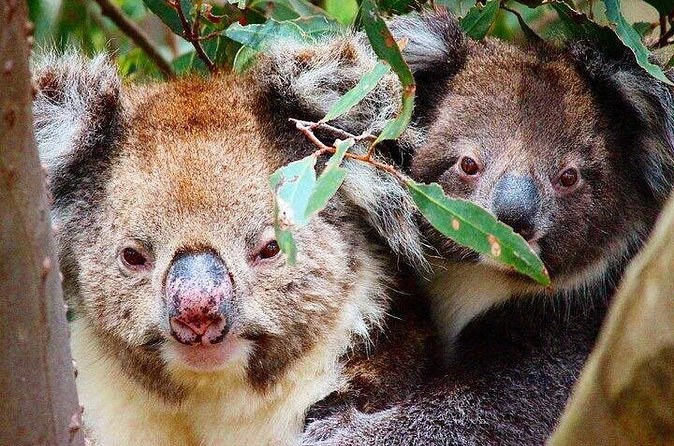
A guided buggy ride of just under two hours through gum forest, dunes and a quiet beach; wheelchair accessible.
From $105 per person (minimum 1)
Check Availability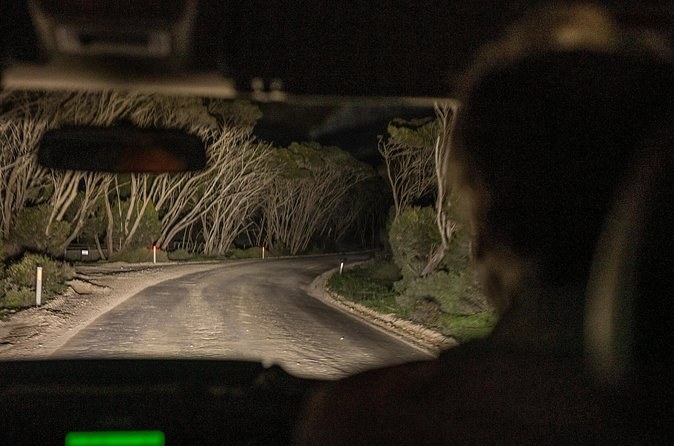
A private night drive of about two hours from Kingscote, torches provided, looking for kangaroos, wallabies and penguins.
From $121 per person
Check AvailabilityNext: turn a month into a plan with the season guide, read what to pack and pay for, or compare every fare on Kangaroo Island Tours.